myGeeKy reads your CV, your repos and your ORCID & Google Scholar papers, then helps you see what is moving in your field, learn what comes next, meet the people working on the same problems and catch opportunities while they are still open. One small panel on the edge of your screen. It only suggests; it never acts for you.
pip install mygeekyWindows installer · one line on Linux and macOS · or pip anywhere · about code signing
Always on top, in three glass themes. No window to manage, no dashboard to log into; close it and nothing keeps running. Click a tab, or just watch.
“I read the twenty sites, so you read one.”
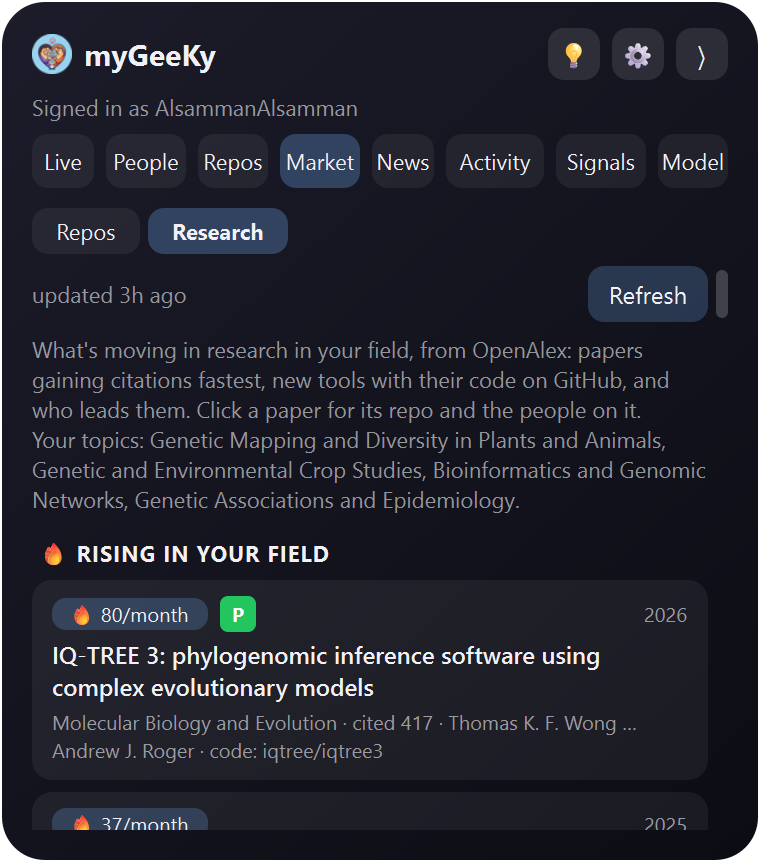
Matched to your own research topics, not a generic popularity list.
It reads OpenAlex, arXiv, bioRxiv, Hacker News, PyPI, Hugging Face, Product Hunt, ORCID, Google Scholar and GitHub. GitHub is one of them, not the point.

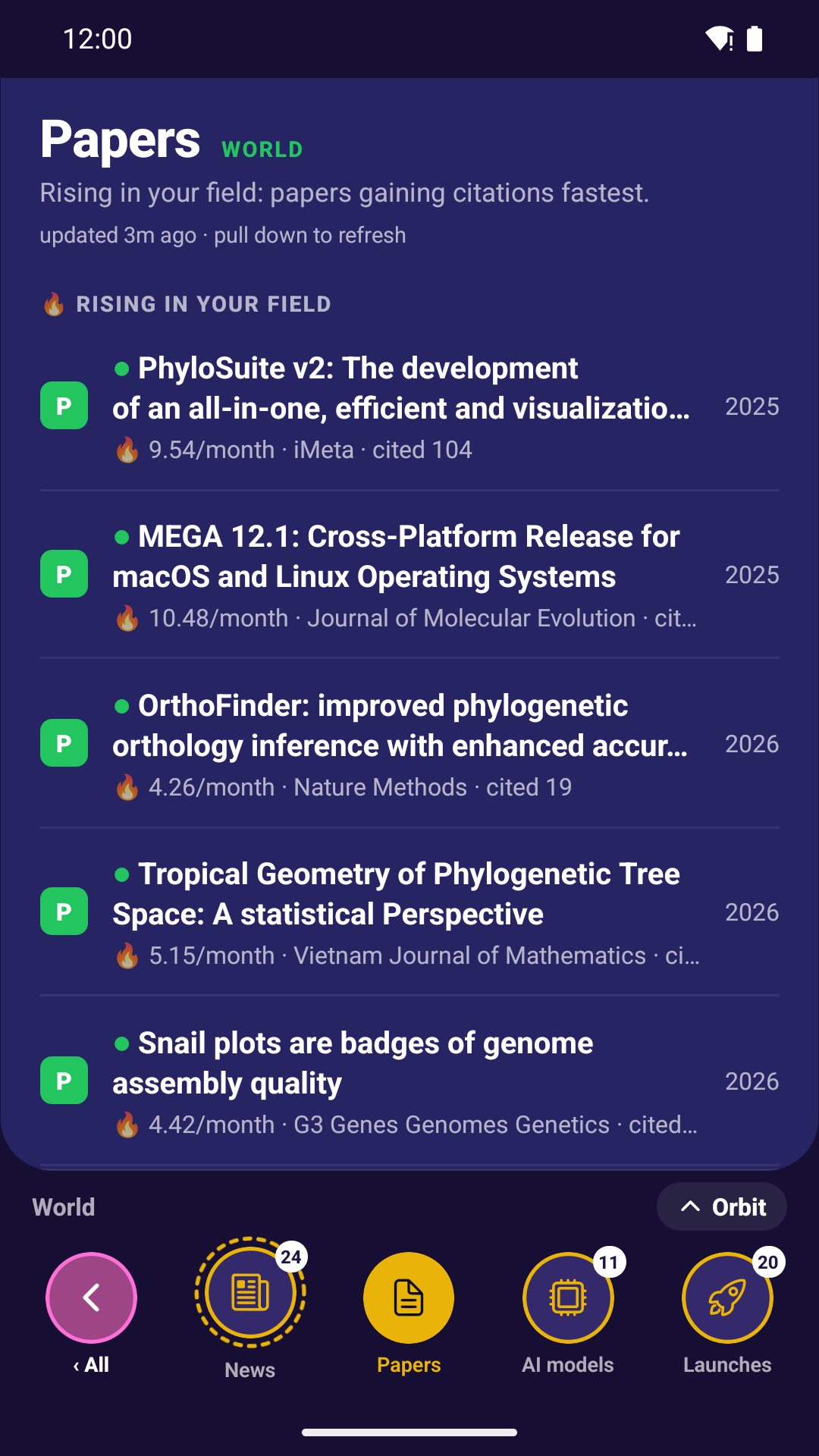
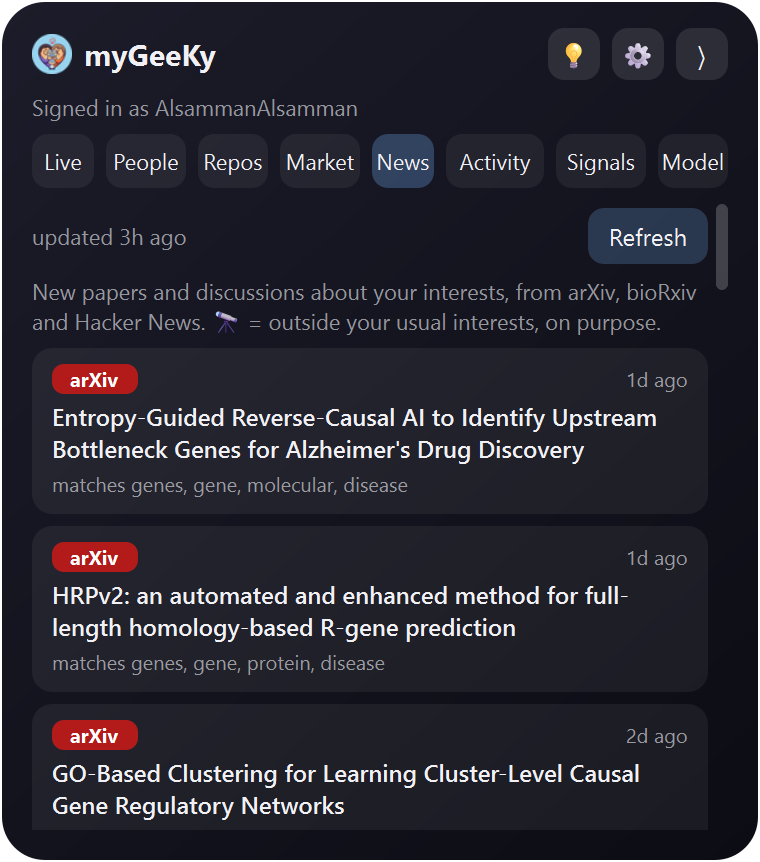
Fresh items from arXiv, bioRxiv and Hacker News, kept only when they genuinely match your interests: two of your terms, or one exact phrase.

The Model tab draws it as a living map: you in the middle, your research field around you, what you've been into lately pulsing further out, and today's new territory on the edge. Correct it whenever it's wrong.
Add "AI" and myGeeKy also looks for LLMs, deep learning and AI agents. Add "GWAS" and it brings in genomics and statistical genetics.
Words not in the dictionary work as plain words, and are passed on, through your beacon or with one click, so the next dictionary learns them.
A new dictionary reaches everyone by itself, at most once a week. No server, nothing hidden: the model is a few hundred lines you can read.
“You haven't used Nextflow yet, and five repos near your work just did. Shall we start?”
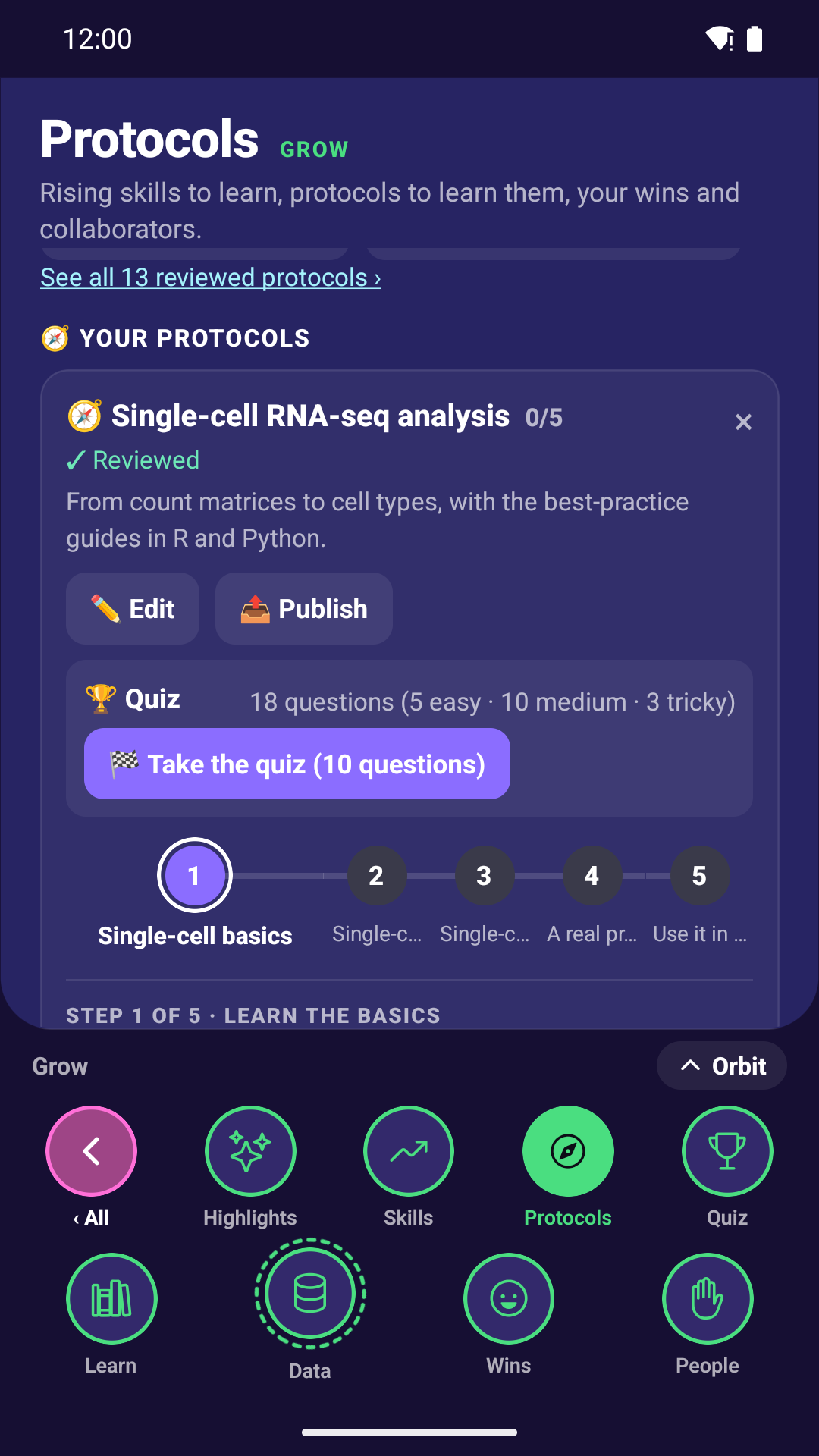
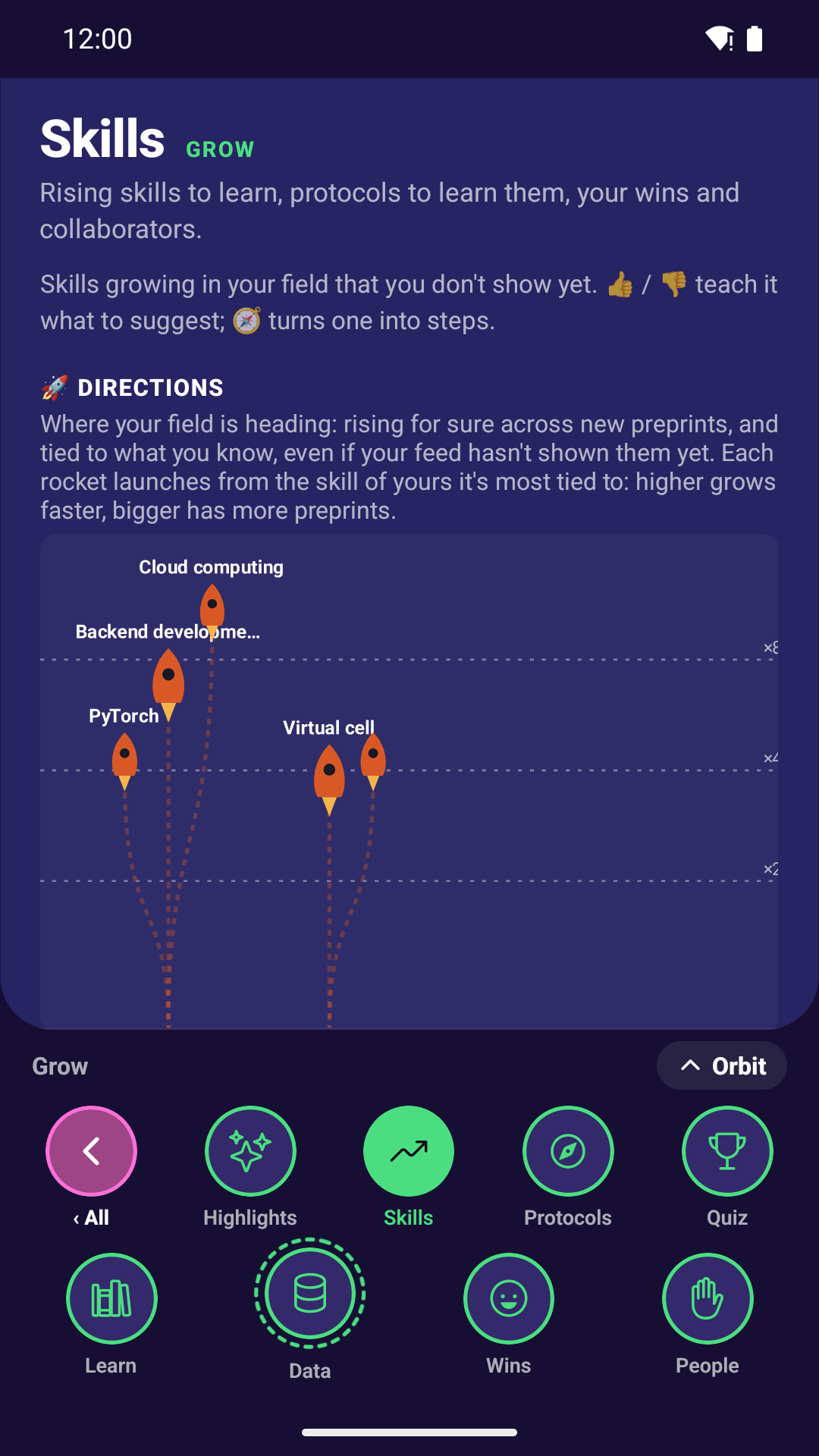
Rising Skills shows what's growing in your field and missing from you. A protocol turns any skill into steps: R basics → statistics with R → a real project to rerun → your own work.

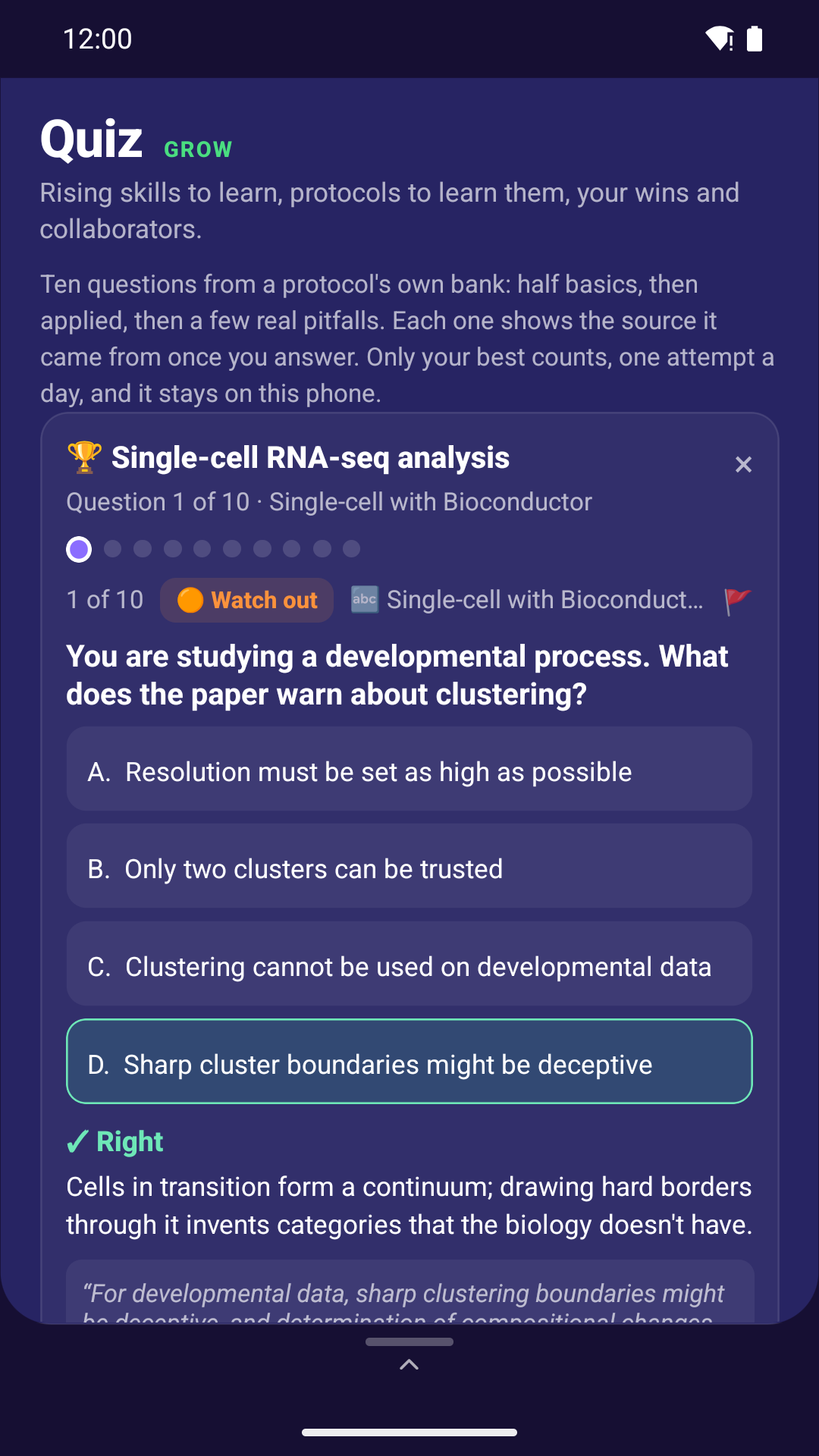
Every protocol has a question bank. An attempt draws ten at random: half basics, then applied, and a few of the mistakes people really make.
accept on a GitHub issue from your own account; withdraw undoes it
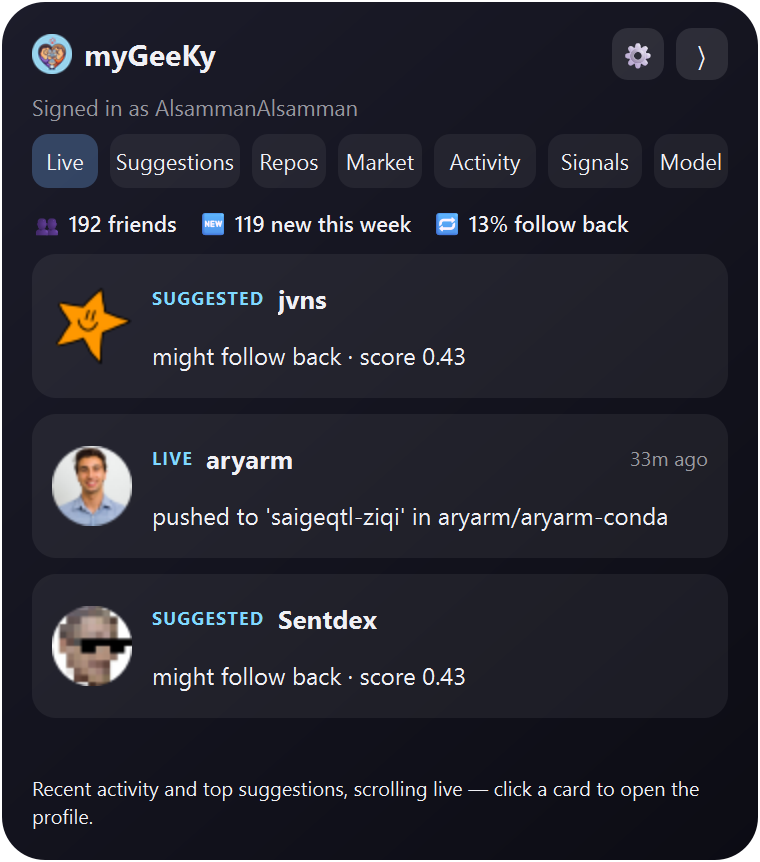
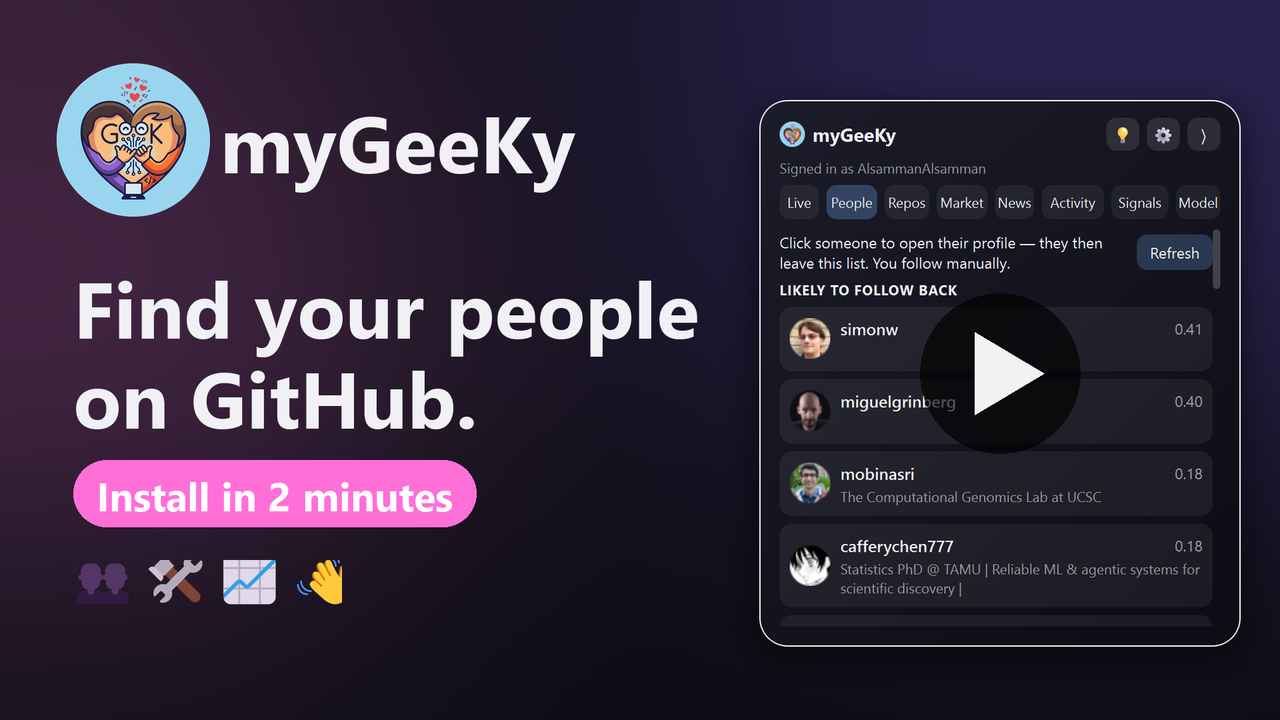
“These four work on what you work on, and they tend to follow back.”
Researchers who share your work and are likely to follow you back, plus domain experts who rarely follow anyone. Celebrities, mass-followers and dormant accounts are skipped.

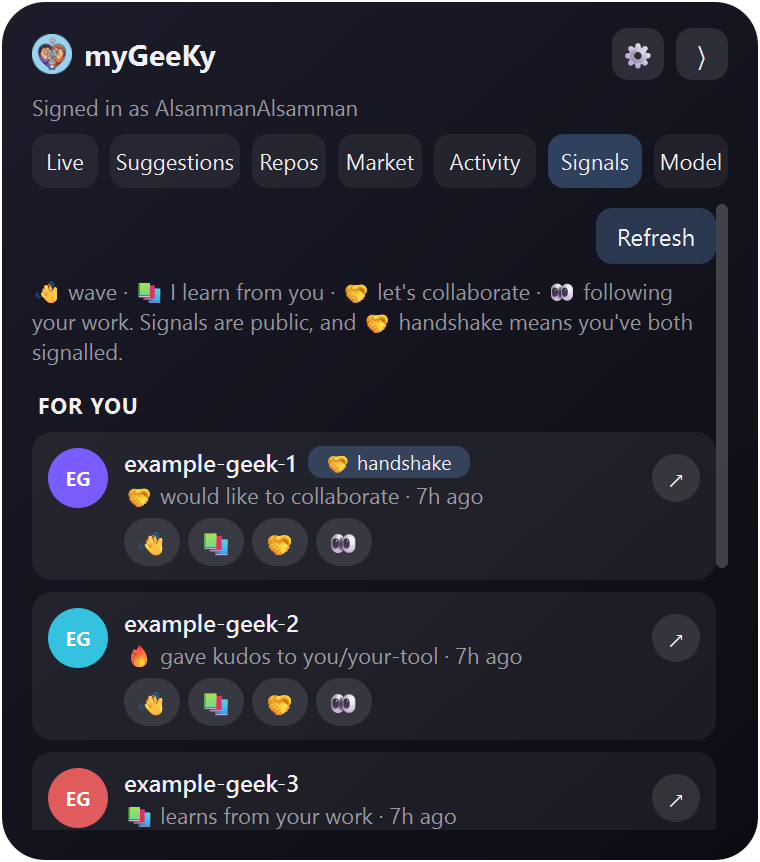
A quiet way to tell someone their work mattered to you: no server, no text, nothing to moderate, and nothing to answer.

“Two deadlines this week. Both still open; I checked the page myself.”
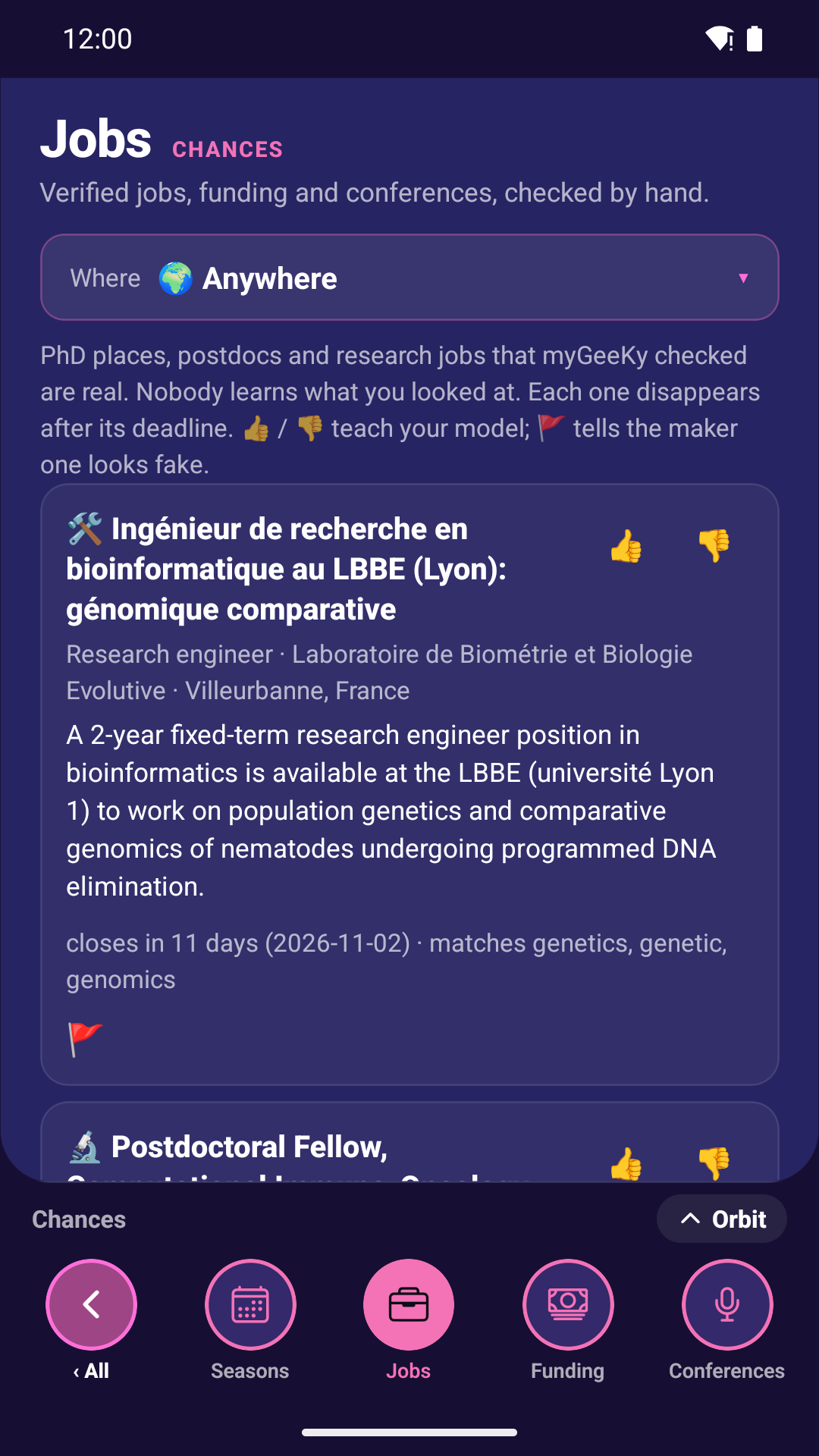
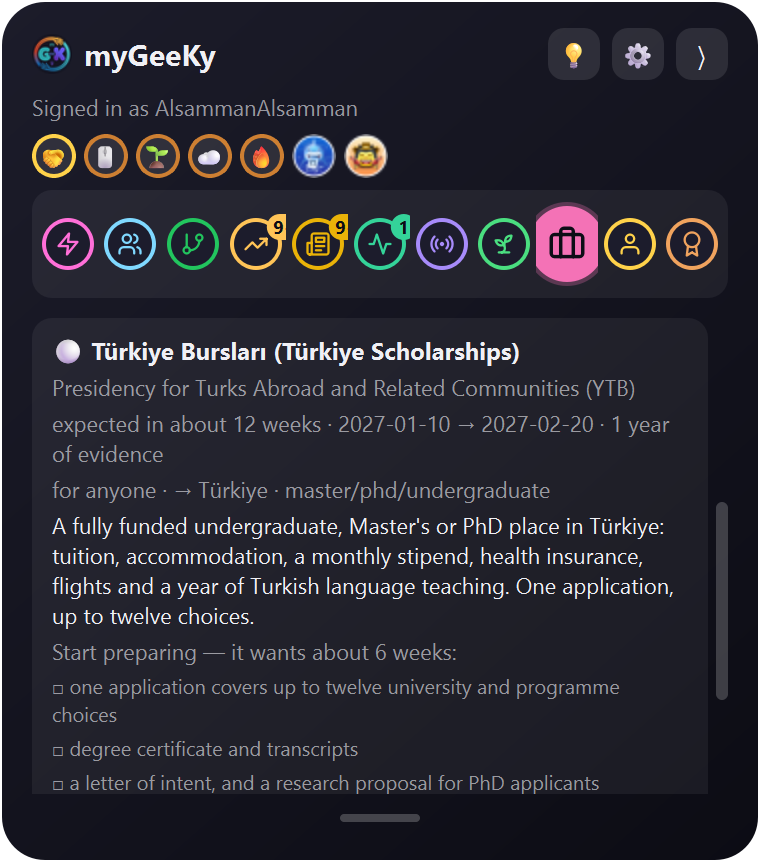
PhD places, postdocs, fellowships, travel grants and meetings in your field, and internships, hackathons and software jobs. Each one is checked against its own page before you see it.

A scholarship doesn't stop being real when it closes: it returns next April, and the preparing takes longer than the applying.

The student in a lab where nobody else writes code. The researcher in a city with nobody in their field. You might be the only one in your building who does this; you are not the only one in the world.
Repos that welcome your pull requests, people building what you build, the tools rising in your corner of software, and interviews, internships and hackathons under 🎯 Chances.
Start with: Git and GitHub for working with others
No repos needed: it reads your CV and your papers. The gentlest protocols start where you are, a spreadsheet of results, and end with a figure and a test you can defend.
Start with: From Excel to R, with your own data
Papers gaining citations fastest with their code, pipelines and methods rising in your field, and the postdocs, fellowships and conferences that fit your topics.
Start with: R for data analysis
You say which fits you best when you set it up, and change it whenever you like; your model learns from what you actually open. Code, data, statistics, figures and pipelines, never laboratory protocols or bench instructions: it can't review bench safety or know your lab's rules, so it stays out of it.
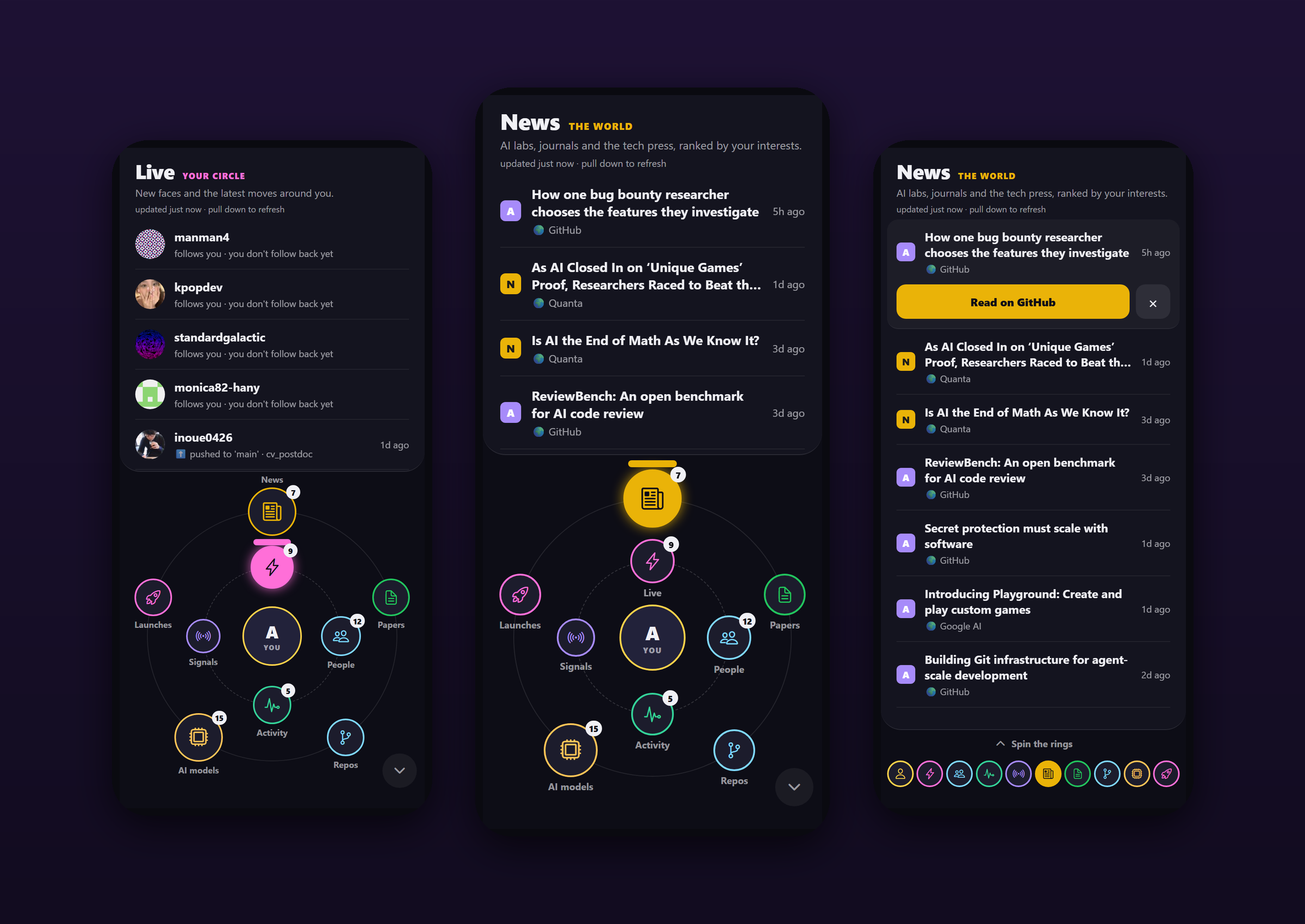
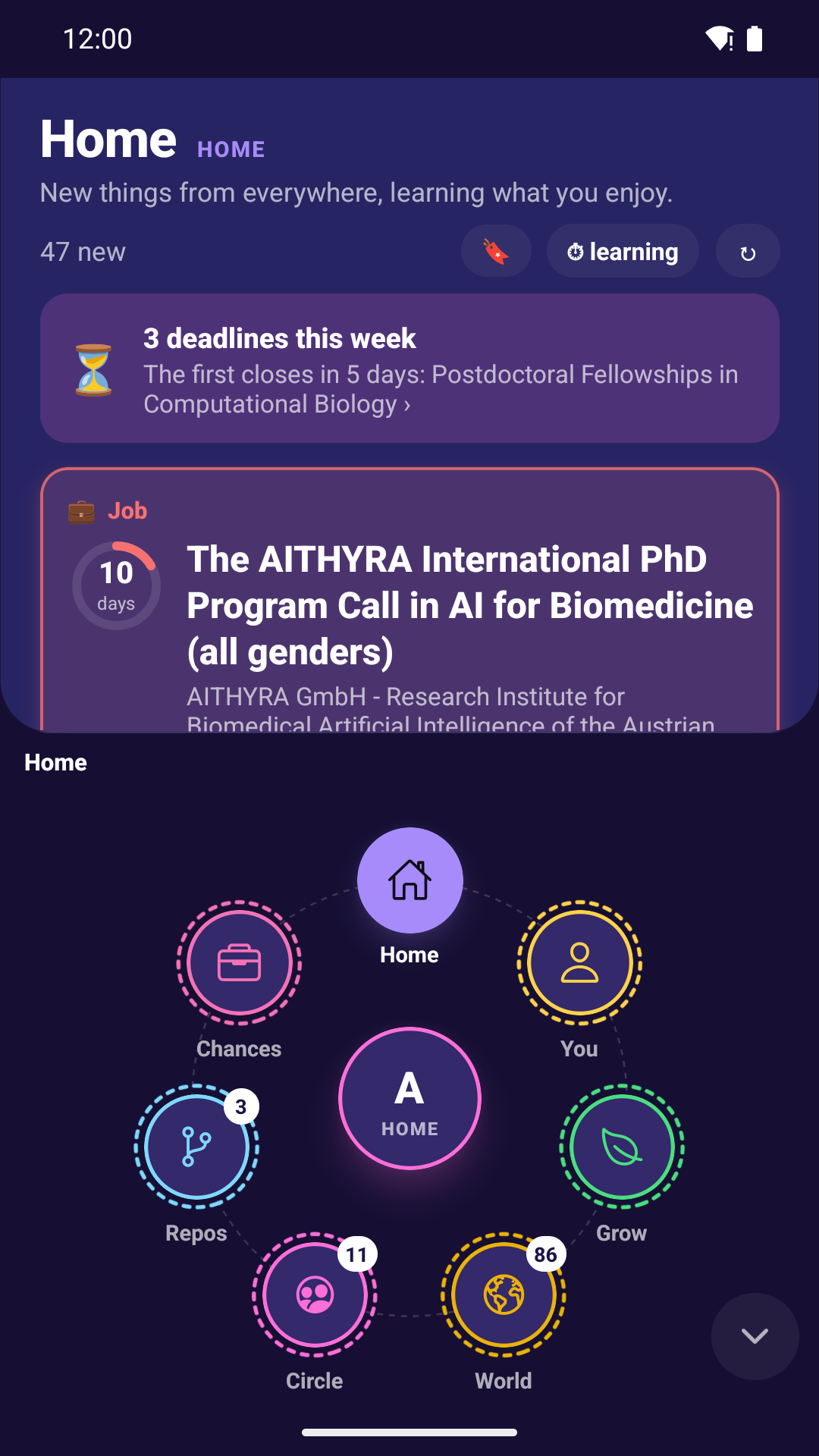
You in the middle, your circle on the inner ring, the world on the outer one. Spin a ring with your thumb, and the planet that locks into the lens opens above it.

“I keep all of this on your computer. I never post for you, and I never tell anyone you were here.” Read the privacy policy.
It never follows, stars, forks, posts or comments: there is no code for it anywhere in the project.
The model that ranks it all runs on your computer. No server, no account, no telemetry.
Tokens live in your system's keyring, checked for least privilege, never logged or printed.
It stays on your computer, plus a private repo you own, if you want sync.
If it breaks, you read the whole report first, personal details stripped, and you decide.
mygeeky-beacon repo, and nothing else.mygeeky-beaconSetup checks what each token can actually do, and refuses one that doesn't fit its job. A GitHub account is optional: it unlocks who'd follow you back, your activity and Signals; everything else works without one. MIT-licensed and open to read: every promise here is a file you can check.
Nothing needs installing first: it sets up Python and Git for you, no admin rights. If Windows says “Windows protected your PC” (not code-signed yet), click More info → Run anyway.
curl -fsSL https://mygeeky.org/install.sh | sh
or with pip:
pip install mygeeky mygeeky setup
Run the one-liner again to update. Macs get myGeeKy.app in Launchpad and Spotlight.
Then just type what you work on. That's the whole setup: the panel opens, and the first run sets up its own window by itself.
From a fresh computer to your first suggestions, protocols and chances.
Click 💡 in the panel. Your browser opens a ready-to-send issue in myGeeKy-ideas, and you press Submit. Nothing is sent until you do. Or email support@mygeeky.org.
Free, open source, and yours.
Windows releases of myGeeKy will be signed through the SignPath Foundation's free code signing program for open-source projects (application pending). Until approved, releases are unsigned.